At Scheuerman Law Firm, S. Tyler Scheuerman draws on decades of experience representing patients harmed by medical negligence in San Antonio, paired with firsthand experience as a former defense counsel for hospitals and other health care providers. That dual perspective shapes how the firm builds a brain injury case from the first medical record forward.
Proving that medical negligence caused a brain injury requires medical records, qualified expert testimony, diagnostic imaging, and a documented timeline connecting a provider’s conduct to the injury. Texas law treats these claims as “health care liability claims,” and state statute requires a claimant to support the allegation with a written report from a qualified medical expert early in the case. Without that evidence, a brain injury claim against a doctor or hospital cannot move forward.
Medical Negligence Under Texas Law
Medical negligence occurs when a health care provider’s treatment falls below the accepted standard of care, and that failure causes injury. Texas groups these cases under “health care liability claims,” a category defined in the Texas Civil Practice & Remedies Code, Chapter 74.
A claim generally requires proof of four elements:
- A duty owed by the provider to the patient
- A breach of the applicable standard of care
- A direct causal link between that breach and the brain injury
- Damages resulting from the injury
Each element must be supported with evidence a court will accept, not simply a poor medical outcome. A bad result alone does not establish negligence under Texas law.
Common Causes of Medical Negligence That Lead to Brain Injuries
Several recurring scenarios appear in brain injury malpractice claims:
- Anesthesia errors, including failure to monitor oxygen levels or airway management mistakes
- Delayed diagnosis or treatment of a deteriorating patient
- Medication errors involving incorrect dosage or dangerous drug concentrations
- Surgical complications that go unrecognized or unaddressed
- Inadequate monitoring by nurses and other hospital personnel
Every case still depends on its own facts, and these categories only describe where brain injury claims commonly arise, not an outcome any particular case will reach.
Key Evidence Needed to Prove Medical Negligence Caused a Brain Injury
Brain injury claims rely on several categories of evidence working together. No single document or statement typically proves the entire case. This usually includes:
- Complete medical records: Admission notes, nursing charts, anesthesia logs, and medication administration records that show what was actually done.
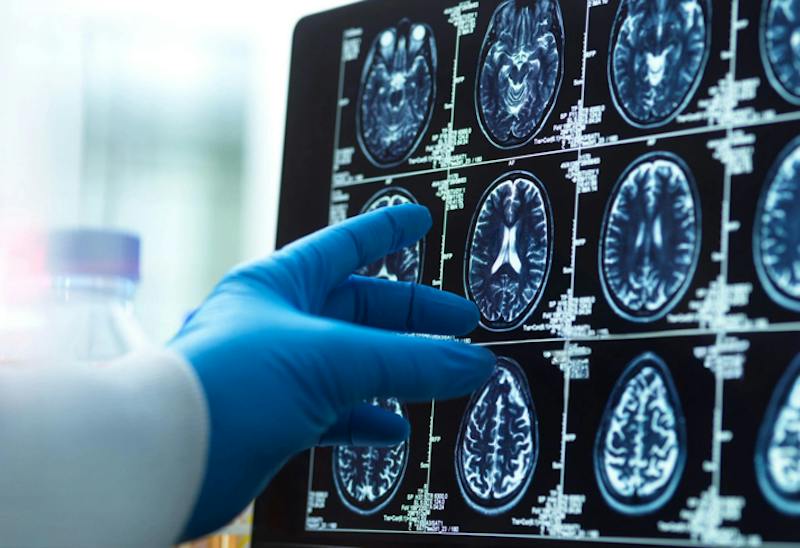
- Diagnostic imaging and lab results: CT scans, MRIs, oxygen saturation readings, and bloodwork that document the injury's onset and severity.
- Standard-of-care expert testimony: A qualified physician who explains what a reasonably prudent provider would have done differently.
- Causation expert testimony: Typically a separate specialist who connects the breach of care directly to the brain injury.
- Timeline reconstruction: A chronological account of treatment decisions, delays, and interventions.
- Witness and staff statements: Observations from nurses, family members, or other providers present during the relevant care.
Gathering this evidence early matters because hospital records and staffing logs are not preserved indefinitely.
Why Expert Testimony Is Required in Texas Medical Malpractice Cases
Texas requires claimants to serve a written expert report before a health care liability claim can proceed. Under the Texas Civil Practice & Remedies Code § 74.351, that report must be served within 120 days of a defendant's answer and must represent a good faith effort to show how the provider's conduct violated the standard of care and caused the claimed injury.
This requirement exists specifically to screen out unsupported claims before litigation advances. For brain injury cases, the report typically comes from a physician in the same or a similar specialty as the defendant, since causation in these claims is rarely obvious without specialized medical knowledge.
How Medical Records and Diagnostic Imaging Help Establish Causation
Causation is often the most contested element in a brain injury claim. Oxygen saturation levels during anesthesia, timestamps on nursing charts, and imaging taken before and after a procedure can show precisely when a brain injury began.
| Traumatic Brain Injury | Hypoxic Brain Injury | |
| Definition | An injury that disrupts how the brain functions, per the Centers for Disease Control and Prevention | Brain damage from insufficient oxygen delivery, per the National Institutes of Health's StatPearls resource |
| Typical Cause in Malpractice Claims | A direct physical event, such as a fall or surgical injury to the head | Anesthesia complications, airway mismanagement, inadequate monitoring, or delayed resuscitation |
| Onset | Immediate, at the moment of impact | Can begin within minutes of oxygen deprivation |
| Key Supporting Evidence | Imaging taken at or near the time of the event | Oxygen saturation readings and anesthesia monitoring logs |
Matching these clinical facts to the provider's documented actions, or the absence of documented monitoring, is often what separates a supported claim from one that cannot proceed.
How Our Background Strengthens Brain Injury Malpractice Claims
Proving that medical negligence caused a brain injury takes more than a difficult medical outcome. It requires medical records, qualified expert opinions, diagnostic evidence, and a clear timeline, all assembled to meet Texas’s specific legal requirements for health care liability claims. Because Chapter 74’s expert report deadline runs quickly after a lawsuit is filed, families facing a brain injury from suspected medical negligence benefit from involving an attorney early rather than waiting to see how care unfolds.
S. Tyler Scheuerman brings a distinct advantage to that work. Before representing injured patients, he served as defense counsel for hospitals and other health care providers, giving him firsthand insight into how institutions build their defense, insight most medical malpractice attorneys never gain. He is Board Certified in Personal Injury Trial Law by the Texas Board of Legal Specialization, a credential held by less than 1.5% of Texas attorneys, and is licensed to represent claimants in the National Vaccine Injury Compensation Program.
Combined with Hella Scheuerman’s decades of civil litigation experience, the firm has handled brain injury cases arising from causes such as a defective anesthesia tube and a concentrated thyroid medication dose. Each matter turned on its own facts, and those results do not predict the outcome of any future claim.
Anyone concerned that a loved one’s brain injury may have resulted from substandard medical care can request a case evaluation to review the available records and determine what evidence the claim would need.
Sources
- Texas Civil Practice & Remedies Code, Chapter 74 — statutes.capitol.texas.gov
- Centers for Disease Control and Prevention, Traumatic Brain Injury & Concussion — cdc.gov
- National Institutes of Health, StatPearls: Hypoxic Brain Injury — ncbi.nlm.nih.gov